
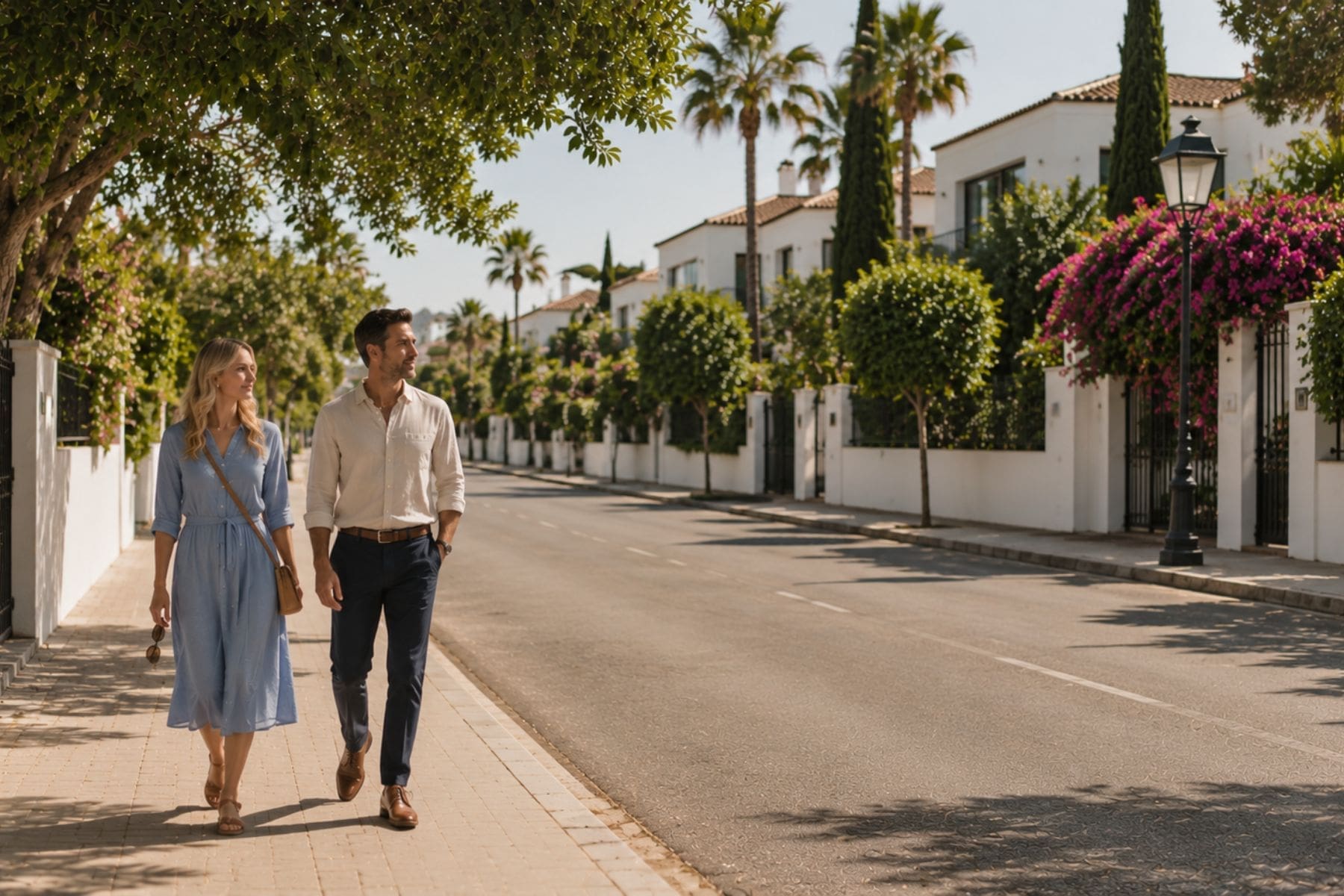
At first glance, house hunting on the Costa del Sol seems simple: you visit a few homes and compare your impressions. In reality, house hunting on the Costa del Sol is much more than just a series of appointments.
Most buyers are looking forward to their first open house on the Costa del Sol.
After weeks or months of searching on real estate websites, it finally feels like the real search is beginning. The plan is set, the homes have been selected, and the calendar is full.
Yet something striking often happens at that moment.
At the end of the day, the homes start to look more and more alike. Buyers still remember the large patios, the beautiful kitchens, and the views, but sometimes they can’t recall exactly which home was in which neighborhood.
That’s not surprising.
An open house is often all about the homes themselves, while the final decision usually comes down to something else entirely.
After all, you’re not just buying an apartment or a villa.
You also choose the street where you wake up every day, the neighborhood where you run your errands, the route you take to the beach, and the area where you might live for years to come.
That’s why a good home tour doesn’t start at the front door of the first house.
It starts much earlier.
Why So Many Open Houses Yield Less Than Buyers Expect
Many buyers try to view as many homes as possible during their stay on the Costa del Sol.
That makes sense. You’re only there for a few days and want to make the most of your time. The more homes you visit, the better your chances of finding the right one. At least, that’s how it often feels.
In practice, the opposite usually happens.
After the fourth or fifth viewing, the details start to get mixed up. Was it that apartment with the spacious terrace, or the other one with the unobstructed view? Which kitchen belonged to which apartment? What neighborhood was that apartment in again?
That has little to do with preparation or attention.
Our brain can process only a limited amount of new information at a time. When you visit visit different neighborhoods, home types, price ranges, and styles in a single day, it becomes increasingly difficult to compare them.
There’s something else to consider.
Viewing a home is relatively simple. You can see the layout, the finishes, the natural light, and the view almost immediately.
A neighborhood works differently.
The atmosphere of a street can’t be captured in a thirty-minute walk. It lies in its tranquility or liveliness, the way people use the space, the traffic at different times of the day, and the small details you only notice when you slow down for a moment.
That is exactly why we don’t believe that a successful open house is all about checking off as many addresses as possible.
The goal isn’t to see as many homes as possible.
The goal is to go home with enough insight to be able to make a well-considered decision.
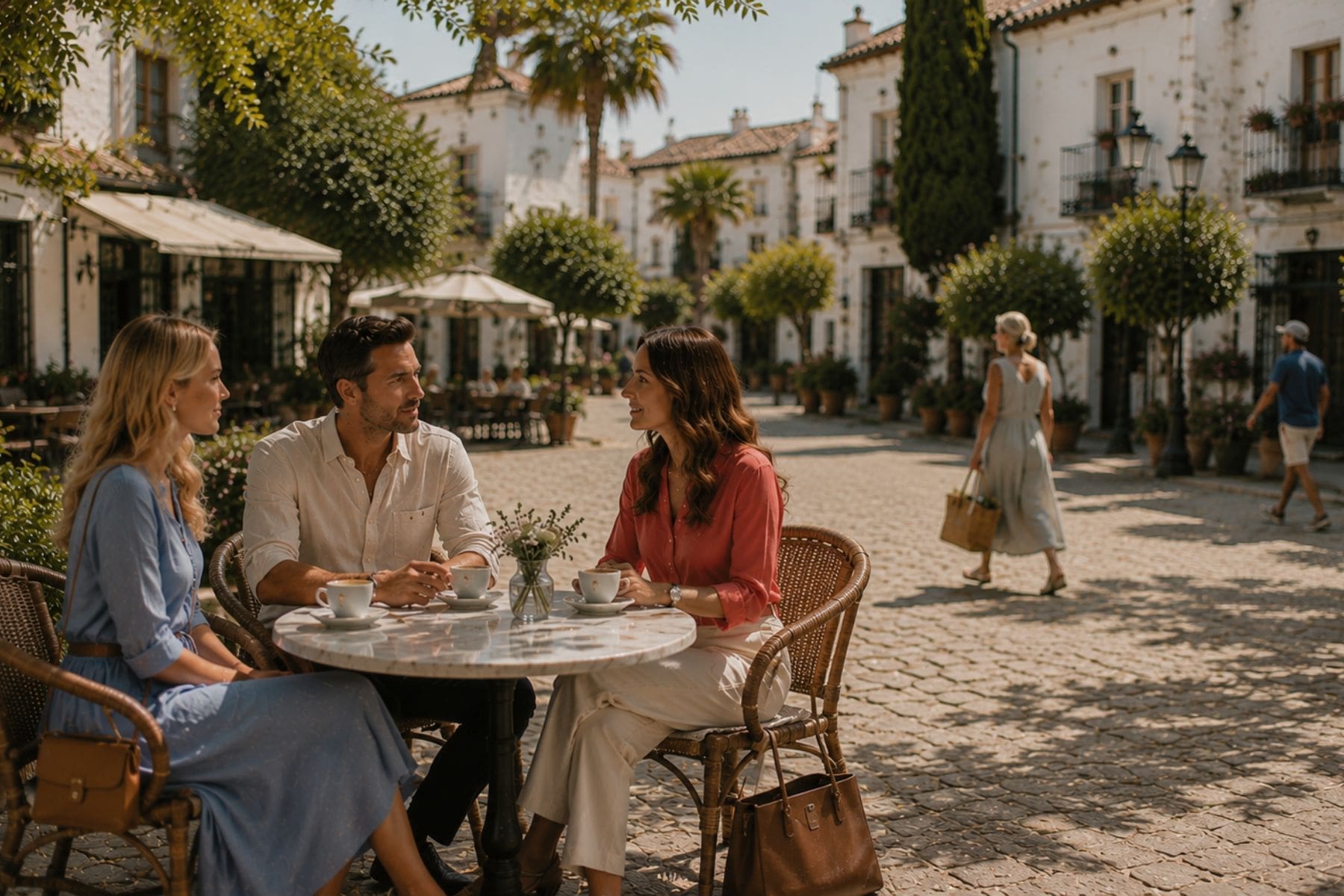
A neighborhood tells its story even before a home does
When people think back on a home they once bought or rented, they rarely remember just the home itself.
They remember what it was like to live there.
The walk to the bakery on Sunday morning.
The silence as they sat on the patio that evening.
The hustle and bustle during the summer months.
The time it took to get to the airport.
Or the chance encounter with the neighbors.
Those are the experiences that determine whether a location still feels right after a few months.
Yet, during a traditional home tour, they often receive surprisingly little attention.
Most of our time is spent focusing on the home itself: the kitchen, the bathrooms, the finishes, the technical features, and the view. These are, of course, important elements, but they tell only part of the story.
The surroundings tell the other part of the story.
What does a street sound like when the windows are open?
Does the neighborhood feel quiet or lively?
Are the hiking trails pleasant?
Is the area inhabited year-round, or does it come alive mainly during the vacation season?
These are questions that no sales brochure can fully answer.
That’s exactly why we encourage buyers not to focus solely on the home, but to also consciously take the time to explore the surrounding area. Walk a block beyond the house. Sit down on a bench for a moment. Have a coffee in the neighborhood. Take in the atmosphere of the area without constantly rushing to your next appointment.
You can always make changes to a home later on.
The neighborhood where it’s located changes much more slowly.
That’s why the environment is often the most sustainable choice you make.
Why our preparations often begin even before your open house
For us, a viewing day doesn’t start the moment we meet.
In many cases, a large part of the preparatory work has already been completed by then.
When we are not yet familiar with a neighborhood—or are not familiar enough with it—we visit it ourselves beforehand. Not to view homes, but to better understand the area. We walk through the streets, assess accessibility, observe daily life, and try to form as complete a picture as possible of the location.
We don’t do that just because we have to know the neighborhood.
We do this because we want to guide our clients as honestly and objectively as possible.
A home may seem like the perfect fit for your needs on paper, but if the neighborhood doesn’t suit your lifestyle, there’s a good chance you’ll be less happy there in the long run.
During the open house, our role changes.
Then it’s no longer about our first impression of the neighborhood, but about yours.
That’s why we like to take the time to explore the surrounding area, even outside the home. Sometimes we take a short walk down the street, discuss what’s in the neighborhood, or point out things you might easily overlook during a quick tour.
Not because we want to decide what’s important to you.
On the contrary.
Every buyer experiences a neighborhood in a different way.
While one customer is looking for a lively atmosphere, another is looking for peace and quiet. Some want everything within walking distance, while others deliberately choose more privacy and space.
It is not our job to make that choice for you.
Our job is to ensure that you make these decisions with as much insight as possible.
What signs do you notice only when you look beyond the house itself?
A good home tour isn’t just about what you see inside.
Often, it’s the small details outside your home that, in hindsight, have the greatest impact on your enjoyment of your home.
That doesn’t mean you have to analyze everything or constantly look for potential problems.
On the contrary.
The key is to take the time to let your surroundings sink in at a leisurely pace.
What is the street like when you stroll down it without rushing?
Are there enough places where you’d spontaneously decide to sit down for a coffee or lunch?
Does the environment feel well-maintained and pleasant?
Do you see people walking, biking, or greeting each other?
Does the neighborhood seem to be inhabited year-round, or is it primarily set up for vacation stays?
Practical matters also deserve attention.
What’s the route like to the supermarket or the golf club? Is it easy to get there? How long does it actually take to get to the airport or the beach? Are there any elevation changes that weren’t really visible in the photos?
Those may seem like minor details.
But it is precisely those details that determine how comfortable daily life ultimately feels.
We often notice that buyers start to notice completely different things during a second or third visit than they did during their first viewing.
Not because the neighborhood has changed.
But because their focus is shifting from the home to the life surrounding it.
And that is often exactly where the greatest clarity emerges.
After all, you’re not buying a collection of square meters.
You choose an environment where your daily life will take place.
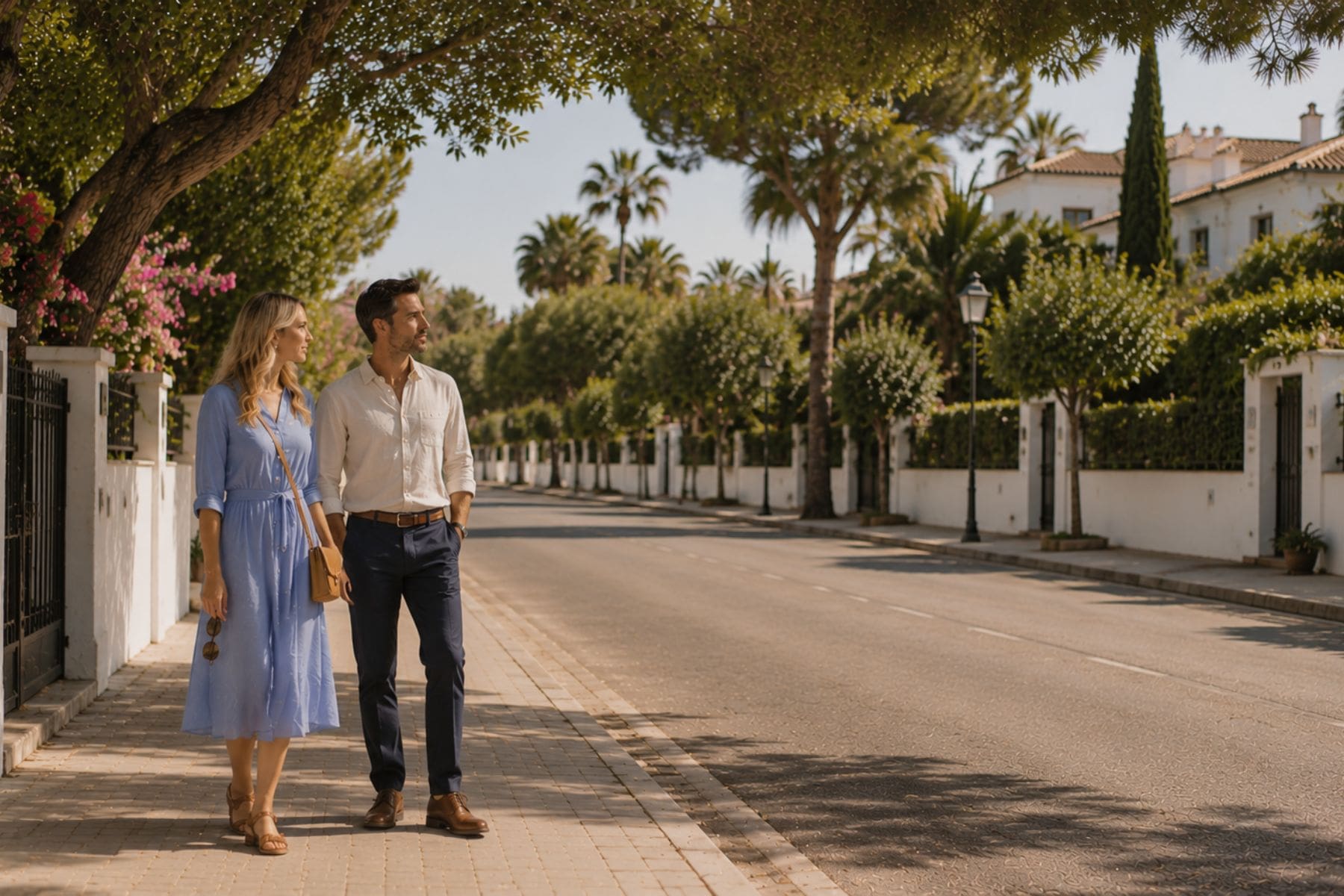
After a day of house viewings, be sure to take some time to reflect
After a busy day of viewings, there’s often a tendency to jump to conclusions.
Which home did we like best?
Which kitchen appealed to us the most?
Where was the view most impressive?
Those are understandable questions, but they don’t always lead to the best decision.
A home can make a strong impression during a first visit. The finishes, the light, or the view can immediately capture your interest. However, after taking some time to reflect, you may realize that another home ultimately better suits the lifestyle you have in mind.
That’s why we recommend taking a step back and giving it some time after a day of open houses.
Don’t just discuss the homes; discuss the neighborhoods as well.
Where did you feel most comfortable?
Which place immediately made you feel like you’d like to come back there again?
Which location stuck in your mind, even when you weren’t constantly thinking about the house itself?
These insights are often much more valuable than a comparison of floor areas, patios, or finishing materials.
Sometimes it’s even a good idea to schedule a second visit.
Not to take another look at the house, but to experience the neighborhood at a different time of day. A quiet residential neighborhood on a Tuesday morning can have a completely different vibe on a Saturday night. By experiencing the neighborhood at different times, you get a much more complete picture of daily life.
A good purchasing decision is rarely made in a hurry.
It grows when experiences are given time to settle.
MDR Buyer Insight
A successful open house isn’t about the number of homes you visit.
It’s all about the confidence that will enable you to make a decision afterward.
That’s why we look not only at the homes themselves, but also at the surroundings where your daily life will unfold. After all, you’re not just buying an address for a single vacation season—you’re buying a place where you want to feel at home for years to come.
Assessing a home requires careful attention.
It takes time to understand a neighborhood.
If you combine both of these factors, you’ll not only make a more informed choice, but you’ll also increase your chances of being satisfied with your purchase for years to come.
That’s why a successful open house doesn’t have to consist of as many appointments as possible.
Often, a more leisurely pace—with plenty of time to experience the neighborhood and let the impressions sink in—proves to be much more rewarding.
In our next Foundation Article, we’ll show you how to plan a property-viewing trip to the Costa del Sol so that you can gain as much insight as possible in just a few days, without feeling overwhelmed by an overloaded schedule.
But perhaps the most important lesson is this one.
Many buyers judge a house-hunting day by the number of homes they’ve visited.
However, the most valuable days for viewings aren’t determined by the number of properties on your schedule, but by the quality of the insights you take home with you.
When you learn to evaluate not only the home itself, but also the neighborhood and your future daily life, a series of viewings turns into a well-considered purchase decision.


Join The Discussion